Guide · updated 2026-10-12
Your First Cold Plunge: 9 Tips for Beginners
First cold plunge? 9 practical beginner tips covering what temperature to start at, how long to stay in, how to breathe, and how to warm up safely afterward.
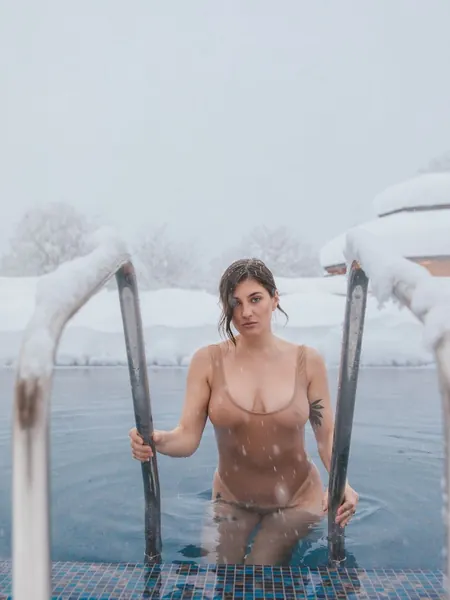
Your first cold plunge is memorable — the question is whether it is memorably good or memorably awful. The difference is almost entirely preparation. These nine tips cover what beginners most often get wrong, so your first session feels challenging in the right way.
Safety note: Cold immersion stresses the cardiovascular system. If you have a heart condition, high or low blood pressure, or are pregnant, talk to your doctor first.
Before you get in
1. Start warmer than you think you need to
Beginners do best starting around 55–60°F, not in near-freezing water. You will still feel a strong cold response at 58°F — the difference between that and 45°F is mostly suffering, not benefit. Studios will usually set a beginner-friendly temperature if you ask. Our temperature guide maps out the full range.
2. Set a modest time goal — and mean it
Aim for 30 to 60 seconds on your first plunge. That is a complete, legitimate first session. Many beginners plan "a few minutes," panic at 40 seconds, and thrash out feeling defeated. A calm 45 seconds beats a miserable two minutes every time. See how long to stay in for progression guidance.
3. Have a plan before you touch the water
Decide in advance: what temperature, how long, and what you will do with your breathing. Decision-making degrades fast in cold water. Walk in with the plan already made and just execute it.
4. Learn the breathing basics on dry land
The cold triggers an involuntary gasp reflex — that is normal. The skill is overriding it with slow, controlled exhales. Practice before you get in: breathe in through your nose, out slowly through your mouth, and keep the exhales longer than the inhales. Never hyperventilate or hold your breath to "prepare."
During the plunge
5. Enter gradually, don't jump in
Step or lower yourself in steadily, letting the cold climb your body over 10–15 seconds rather than shocking your whole system at once. Sudden full-body immersion spikes the gasp reflex hardest.
6. Keep your head above water
Submerging your head adds risk (including the mammalian dive response affecting heart rate) without adding anything useful for a beginner. Shoulders-and-below is the standard.
7. Relax your shoulders and unclench everything
Beginners tense every muscle, which makes the cold feel worse and burns through your composure. Consciously drop your shoulders, unclench your jaw, and let your hands rest. You will be surprised how much of the "pain" was tension.
8. Get out before you think you must
Exit while you still feel in control — not when you are desperate to escape. Warning signs to exit immediately: dizziness, nausea, numbness that feels wrong, intense shivering, or any sense that something is off. There is no prize for staying in through warning signs.
After the plunge
9. Rewarm gradually — don't rush it
Get out, towel off, and let your body rewarm at its own pace. A warm (not scalding) shower or a few minutes back in the sauna is ideal. Expect to keep shivering lightly for several minutes — that is your body generating heat, and it is normal. Drink water, get dressed warmly, and give yourself 10–15 unhurried minutes before driving or heading out.
What to bring and wear
- Swimsuit — required at virtually all communal studios
- Towel — most studios provide them, but bring your own to be safe
- Warm layers for after — you will appreciate a hoodie more than you expect
- Water bottle — hydrate before and after, especially if you sauna first
- Sandals — useful in communal facilities
Common first-timer mistakes
- Going as cold as possible to "prove" something
- Staying in until miserable instead of exiting calm and in control
- Holding your breath or hyperventilating
- Plunging on a full stomach or after drinking alcohol
- Skipping the rewarm and rushing out into the cold air
Do the opposite of that list and your first plunge will be something you actually want to repeat.
Find a beginner-friendly studio near you
Studios are the best place to start — controlled temperatures and staff on hand. Browse cold plunge studios by state to find one near you.
After your first session: building the habit
One plunge is an experience; the practice is what matters. In your first few weeks, keep a simple log: date, water temperature, time in, and a one-line note on how you felt during and after. Patterns emerge fast — you will see which temperatures feel productive versus punishing, and whether morning or evening sessions suit you better. Resist the urge to go colder every session; progress in cold exposure is measured in calmness, not degrees. When 60 seconds at your starting temperature feels easy and your breathing stays controlled throughout, then — and only then — consider dropping a few degrees or adding 30 seconds. Most regulars find a comfortable groove within a month and stay there for years.
The content in this guide is for informational purposes only and is not medical advice. Cold plunge studios vary in how they operate, and prices and availability change often — confirm details with the studio before you book. Read our full disclaimer.